.jpg)



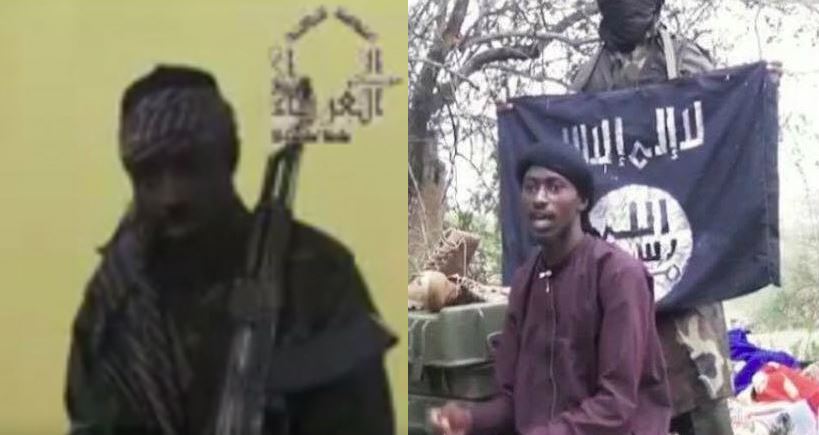
In 2015, rumours started spreading that Shekau had been killed or replaced after he failed to make a verified video appeareance for the past year.
More from IBTimes UK
Nigeria: Ipob leader Nnamdi Kanu is not renouncing Biafra, says wife
South Sudan's President Salva Kiir fires six ministers loyal to rebel leader Riek Machar
Republicans confirm Donald Trump will be on the ballot after rumours of plot to replace him
Al-Barnawi, believed to be the only surviving son of the late Yusuf, was Boko Haram's spokesperson until he and other members defected to form the Vanguard for the Protection of Muslims in Black Lands (Ansaru) group in 2013. The splinter operates in north-eastern Nigeria and, unlike Boko Haram, does not attack Muslim civilians or force women and children to carry out suicide bombing missions.
Why advertise with us
Although Ansaru is a splinter of Boko Haram, security analyst David Otto explained that the two groups reintegrated in the Nigerian-Cameroon border region, where they exchange resources and militants "towards a common goal."
Following the new appointment, Shekau , released an audio message in Arabic and Hausa accusing al-Barnawi of trying to stage a coup against him.
We could witness the fall of one brutal leader and the rise of one whose temperament is virtually unknown and untested," Otto, CEO of global security provider TGS Intelligence Consultants, told IBTimes UK.
"Yusuf was charismatic and strategic. He was not as brutal as his successor Shekau. If his son took his complete DNA, then we could see a reduction of attacks and certain soft targets, like places of worship, reduce significantly.
"However, if Abu Musab follows the footsteps of his master Shekau, he may lead an organisation that will be ready to launch more daring attacks with a focus on targeting the west and its interests inside and outside West Africa."
Differences between the two leaders
Boko Haram's leader Abubakar Shekau
What seems to be Boko Haram's leader Abubakar Shekau in its propaganda.
Abubakar Shekau
In 2015, Boko Haram pledged allegiance to IS. However, Shekau is known for preferring Boko Haram's autonomy from foreign jihadist groups.
The fact that some Boko Haram members left the group to form other splinters has cast doubt over Shekau's leadership.
Shekau has been criticised by many Boko Haram members – and IS itself– for killing Muslims and allowing the use of children in suicide bombing missions. In June 2016, the head of the US military's Africa Command, claimed internal divisions within Boko Haram, were caused because Shekau had failed to observe IS instructions by, among other things, ignoring calls to cease the use of children as suicide bombers.
"Shekau still commands a very large following - he is feared for his brutal reactions against anyone that goes against his leadership," Otto said. "The new replacement could also be an indication that under Shakau - ISIL was struggling to have control of his command."
Abu Musab al-Barnawi
Al-Barnawi, who had become a key member of Ansaru, has been praising IS activities, such as the attack on French magazine Charlie Hebdo in Paris in January 2015. Although Ansaru was an ally of al-Quaeda, it is believed the group has increasingly sought cooperation with IS.
"Al-Barnawi has been the spokesman of Ansaru after the 2012-2013 split. He personally distanced himself from the killing of Muslim civilians by Boko Haram in 2012," explained Otto.
After being appointed as the new Boko Haram leader, Al-Barnawi threatened to bomb churches and kill Christians while ending attacks on mosques and markets. He also alleged there was a plot to Christianise the Muslim-majority northern Nigeria.
"ISIL were probably struggling to claim the loyalty of militants in West Africa. This may be a role that Abu Musab will be prepared to lead - a new face and a new strategy under ISIL command - a thing they did not enjoy under Shakau," explained Otto.